
Find Your Ideal West Lothian Web Designer in Under 30 Minutes
Choosing a web designer becomes a whole lot simpler once you’ve mapped out a clear plan for your project. This means getting real about your business goals, figuring out who you’re actually trying to talk to, and listing the absolute must-have features for your site. Honestly, getting this groundwork done is the most critical part of the whole process.
Defining Your Project Needs Before You Search
Before you even start looking up web designers in West Lothian, you need to take a good, hard look at your own business.
Walking into meetings without a clear vision is like asking an architect to build a house but not telling them how many bedrooms you need. It’s a recipe for vague quotes, endless back-and-forth, and a final website that might not even do the job you hired it for.
When you take the time to define your needs first, everything just flows better. Designers can give you sharp, accurate proposals because they know exactly what you're trying to achieve. That clarity is your best defence against the dreaded scope creep and surprise costs later on.
How to Pinpoint Your Primary Business Goals
What’s the number one job for your new website? Forget about colours and fonts for a minute; we're talking about business results. A website is a tool, and you need to know precisely what you need it to do. This one core objective will shape every single design decision.
Think about what success actually looks like for you:
- Generating Local Leads: Is the main goal for people in Livingston, Bathgate, or Linlithgow to find your services and get in touch?
- Driving Online Sales: Are you an e-commerce business that needs a smooth, secure checkout to sell your products?
- Showcasing a Portfolio: Maybe you're a photographer or artist who needs a stunning, visual-heavy gallery to show off your work?
- Providing Information: Or is your site more of a resource hub for existing clients, offering support articles or booking functions?
Who Are You Trying to Reach?
Next up: who is your ideal customer? A website built for a tech-savvy young professional in Edinburgh will look and feel completely different from one targeting retirees in the West Lothian countryside. Knowing your audience helps a designer craft an experience that truly connects with them.
A well-defined project brief is the foundation of a successful website. It aligns your vision with the designer's execution, ensuring the final product meets your specific business objectives and speaks directly to your target audience.
Before you start your search, it's vital to get your vision down on paper. Using effective design brief example templates is a great way to make sure you and your potential designer are on the same page from day one. For a bit more inspiration, our guide on general web design tips and tricks offers some more practical insights.
How to Evaluate a Designer's Portfolio
A designer’s portfolio is their professional storybook. It shows you not just what they can do, but how they solve real business problems for clients just like you. When you're figuring out how to choose a web designer, digging into their past work is your single most important task.
This is where you can separate the artists from the actual business partners.
Don't just glance at the pretty pictures—you need to get hands-on. Click through the navigation on their example sites, fill out a contact form, and get a feel for how the site works. A truly great design is one you don't even notice because it's just so intuitive.
Look Beyond the Visuals
While a beautiful design is obviously important, the real measure of a website is its functionality and user experience. A stunning site that's slow, confusing, or broken on mobile is essentially a useless (and expensive) digital ornament.
Your goal is to find a designer whose work is both beautiful and incredibly practical.
Here’s a practical checklist to run through when you’re reviewing a portfolio site:
- Mobile Responsiveness: Seriously, pull out your phone. How does the website look and function? With so much traffic coming from mobile, this is completely non-negotiable.
- Navigation and User Flow: Can you find key information easily? Do you understand the purpose of the site within a few seconds? If you get lost or frustrated, so will your customers.
- Loading Speed: How quickly does the site load? Slow websites kill conversions and send users clicking away in seconds.
- Clear Call-to-Actions (CTAs): Does the site clearly tell visitors what to do next? Whether it’s "Buy Now," "Contact Us," or "Learn More," the next step should be obvious.
The UK web design scene is incredibly crowded, with over 2,041 active agencies as of 2023, according to data from IbisWorld. To stand out, you need a site that's technically sound and completely focused on the user. That’s why a thorough portfolio review is so vital.
How to Ask the Right Questions
Once you’ve had a good look around their work, it’s time to dig a bit deeper. A portfolio only ever shows the finished product; you need to understand the process and, crucially, the results behind it.
Asking specific, insightful questions will reveal a designer’s true contribution and strategic thinking.
A portfolio proves a designer can build a website. A conversation about that portfolio proves they can build the right website for your business and deliver actual results.
Get a few questions ready for when you speak with them. Something like:
- "What was your specific role in this project? Did you handle the design, the development, the SEO, or everything?"
- "What were the client's original business goals, and how did this website help them hit those targets?"
- "Can you walk me through the biggest challenge you faced on this project and how you solved it?"
These kinds of questions shift the conversation away from just surface-level design and into strategy, problem-solving, and results—the things that will actually make a difference for your West Lothian business. To see how different business goals can be translated into real, functional websites, feel free to explore our past projects.
Checking for Essential SEO and Technical Skills

A beautiful website is a great start, but what's the point if potential customers in West Lothian can't find it on Google? If it’s not visible, it might as well not exist.
This is where a designer's technical know-how and grasp of Search Engine Optimisation (SEO) become non-negotiable. You're not just paying for a pretty design; you're investing in a marketing tool that needs to perform.
So, when you're choosing a web designer, you have to look under the bonnet. You need someone who gets that a site’s performance is every bit as important as its looks. That means building something fast, secure, and structured in a way that search engines can easily crawl, understand, and rank.
A designer with a solid technical foundation is building a site that won't just launch well—it'll thrive. By focusing on clean code and a logical site structure from day one, they’ll save you a world of expensive technical headaches later on.
Core Technical Skills to Look For
You don't need to be a tech wizard to figure out if a designer knows their stuff. It's less about understanding the jargon and more about asking about the results. A good designer should be able to explain, in simple terms, how they build a website to perform.
Here are the absolute must-haves:
- Responsive Design: This is basics 101. Your site needs to look and work perfectly on every device, from a big desktop monitor to the smallest smartphone. Ask them to show you examples from their portfolio and check them on your own phone.
- Page Speed Optimisation: A slow website is a conversion killer. A skilled designer knows the tricks of the trade—optimising images, streamlining code, and using modern techniques to get your pages loading in under three seconds.
- Clean and Semantic Code: You won't be reading the code yourself, but a designer who writes clean HTML and CSS is building a more stable, secure, and SEO-friendly site from the ground up.
A great designer also has skills in areas like effective conversion optimization, which is crucial for turning those website visitors into actual paying customers.
How to Gauge Their SEO Knowledge
SEO can feel a bit like a dark art, but you can get a good sense of a designer's understanding with a few direct questions. A designer who thinks about SEO from the very beginning gives your business a massive head start.
A website built without considering SEO is like a shop built with no roads leading to it. Your designer's job is to build those initial pathways so customers can find you.
Here’s how to check if they're on the ball:
- Ask about their process: "How do you approach on-page SEO during the design process?"
- Check their image optimisation: "What's your process for optimising images for speed and SEO?"
- Verify site structure knowledge: "How do you make sure the sites you build have a proper heading structure (H1s, H2s, etc.)?"
- Confirm setup of basics: "Will you set up basic SEO elements like title tags and meta descriptions for us?"
Listen to their answers. They should sound confident and clear. If they seem cagey, dismiss the importance of it, or say "that's a separate service," it's a huge red flag. Finding a web designer in West Lothian who gets these fundamentals is absolutely key to building a site that actually helps your business grow.
Finding a Partner with the Right Communication Style
A killer portfolio and serious technical chops are non-negotiable, but what often makes or breaks a web design project is something far more human: communication. A designer's ability to actually listen, get what you're trying to achieve, and keep you in the loop is what turns a potentially stressful experience into a brilliant collaboration.
This is especially true when you're looking for someone local here in West Lothian. You need a partner you can click with.
It's not just about being friendly, though. You're looking for a professional who has a clear, transparent process for working with clients. That very first conversation is your best chance to figure this out. Are they asking sharp questions about your business goals, or are they just rushing to give you a price? A great designer is genuinely curious about what makes you tick.
How to Set Expectations from the Start
Clear communication is the secret sauce that prevents misunderstandings and keeps everything on track. You absolutely need to know how the designer works, how they prefer to get feedback, and what their day-to-day process looks like.
Don't be shy about asking direct questions. It’s the only way to know if your styles will mesh. A structured workflow isn't just corporate jargon; it's the mark of an experienced pro who respects your time and your budget.
Here are a few essential questions to get you started:
- What does your project management process look like? Find out how they organise tasks and hit deadlines.
- How will you keep me updated? Will it be weekly emails, scheduled calls, or maybe a shared project board?
- How do you handle feedback and revisions? A solid feedback loop is vital to avoid endless back-and-forth and painful delays.
Spotting the Right Communication Cues
Pay close attention to how they answer. A designer who can clearly walk you through their process is probably going to be organised and reliable when the project kicks off. They should make you feel like a collaborator, not just another task on their to-do list.
Finding a designer who is a strong communicator is just as important as finding one with strong technical skills. Their ability to translate your ideas into a functional website depends entirely on how well they listen and collaborate.
Think about it: a staggering 94% of website feedback is about the design itself, not the words on the page. This stat really drives home how critical it is for a designer to understand and accurately interpret your vision.
That’s why choosing someone with excellent communication skills isn't just a "nice-to-have"—it's fundamental to getting a result you’ll love. You can dig deeper into how design impacts first impressions on vwo.com.
Comparing Quotes and Understanding True Value
When you start getting web design quotes back, it can feel a bit like comparing apples and oranges. The prices are often all over the place for what seems like the same job, and it’s easy to get overwhelmed. But here’s the thing: the smartest move isn’t just grabbing the cheapest option. It’s about digging into what each quote actually includes and what that means for your business down the line.
A cheap website that doesn't bring in leads, make sales, or even look professional isn't a bargain—it's a problem waiting to happen. Real value comes from a proposal that clearly lays out what you're getting, shows the designer understands your business goals, and sets you up for success long after launch day.
How to Look Beyond the Bottom Line
The best way to compare quotes is to break them down piece by piece. Forget the final number for a second. Instead, put them side-by-side to see what you’re really paying for. You’ll often find that a higher price tag includes crucial elements that a cheaper quote conveniently leaves out.
A solid proposal from a designer who knows their stuff should detail things like:
- Discovery and Strategy: How much time will they spend getting to know your West Lothian business, your customers, and what you want to achieve?
- Number of Pages and Revisions: Is the scope of work crystal clear? You need to know exactly how many pages are included and how many rounds of design changes you get.
- SEO Foundations: Are they covering the basics like on-page optimisation, ensuring it works flawlessly on mobile, and tuning it for speed?
- CMS Training: Will they show you how to update your own site, or will you be calling them for every little change?
- Post-Launch Support: What’s the plan if something goes wrong a week after the site is live?
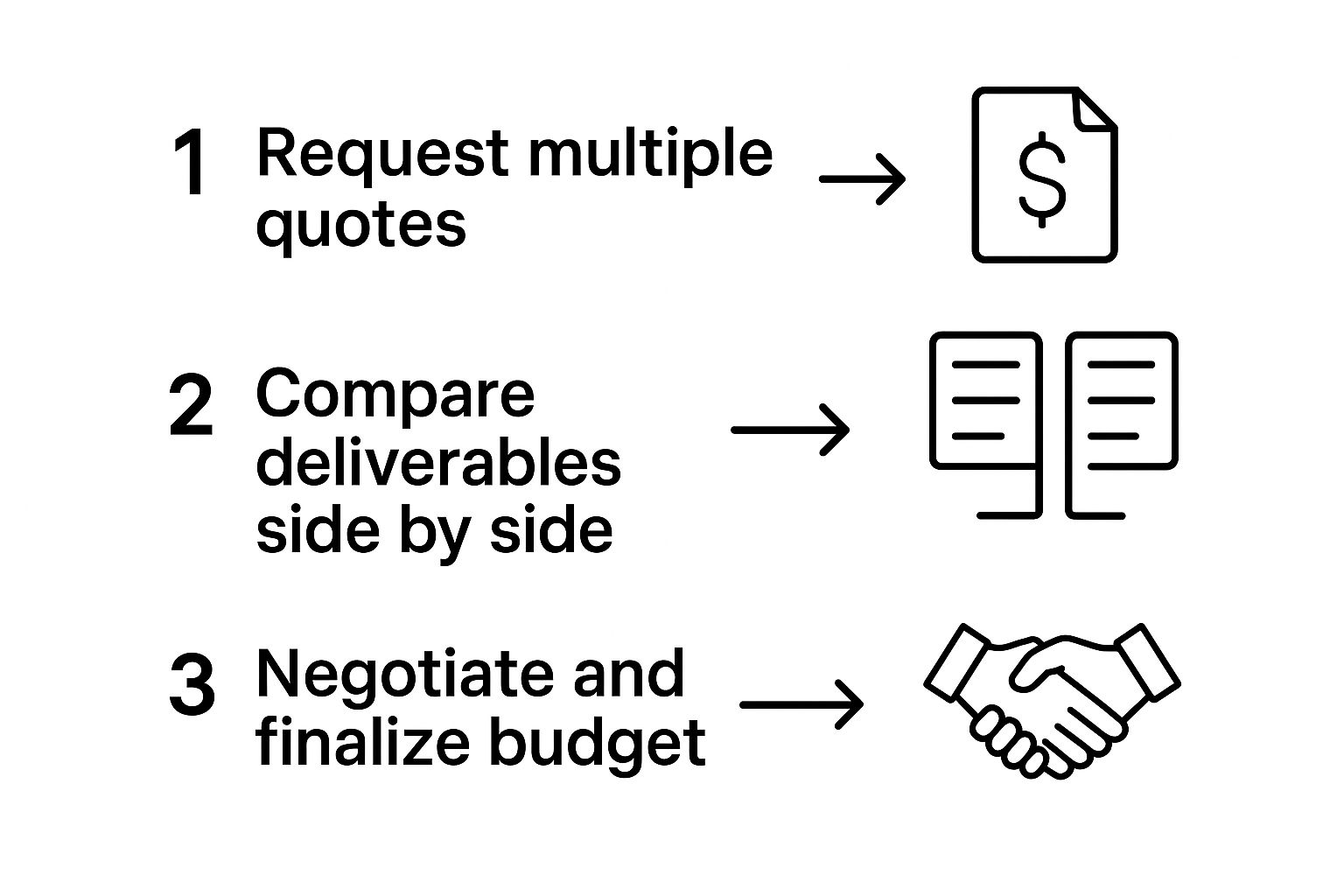
The UK web design market is incredibly competitive. According to IbisWorld, the sector saw a contraction between 2020 and 2024, with revenue expected to land around £621.3 million. What this means for you is that designers who deliver genuine, measurable results are in high demand because businesses are scrutinising every pound they spend.
Web Designer Quote Comparison Checklist
To make this easier, here is a simple checklist. Use this to compare the quotes you receive side-by-side. It forces you to look at the full picture and evaluate the complete service, not just the price.
| Feature / Service | Designer A | Designer B | Designer C |
|---|---|---|---|
| Initial Discovery & Strategy Session | |||
| Number of Included Pages | |||
| Number of Design Revisions | |||
| Mobile-Responsive Design | |||
| Basic On-Page SEO | |||
| Content Management System (CMS) | |||
| CMS Training Session | |||
| Hosting & Domain Setup | |||
| Post-Launch Support (e.g., 30 days) | |||
| Ongoing Maintenance Cost | |||
| Total Project Cost |
This simple table can be a real eye-opener. The quote that looked like a bargain might suddenly seem a lot less appealing when you see what’s missing.
Uncovering Hidden Costs and Future Expenses
The cheapest quote today can easily become the most expensive one tomorrow if it doesn’t factor in your ongoing needs. A classic pitfall is overlooking the recurring costs of hosting, domain renewals, and essential website maintenance.
The real cost of a website isn’t just the initial build price; it's the total cost of ownership over its entire lifespan. A good quote is transparent about ongoing expenses, while a poor one leaves you to discover them on your own.
Don't be shy about asking direct questions about these long-term costs. Any reputable West Lothian designer will be completely upfront about what you can expect to pay for hosting, security updates, and any other regular fees.
Understanding these expenses is vital for budgeting properly and avoiding nasty surprises. If you want to see how all these pieces fit together, you can see what’s included in a customised web design package. A little bit of homework now will save you a world of headaches—and money—in the future.
FAQs: Choosing a Web Designer in West Lothian

Even after you've done your homework and shortlisted a few designers, some practical questions always seem to surface right before you're ready to commit. Getting these answers sorted out beforehand gives you the confidence to move forward. Here are the most common questions we get asked by businesses across West Lothian.
How Much Should I Budget for a New Website?
This is nearly always the first question, and the honest answer is: it really depends on what you need it to do. A sharp, professional website for a local service business might fall in the £1,500 to £3,000 range. For a more complex e-commerce shop or a site with custom features like a booking calendar, the investment could be anywhere from £5,000 to over £15,000. It's crucial to view your website as an investment in your business, focusing on the long-term value it will generate.
What Is the Difference Between a Web Designer and a Developer?
It’s a bit like building a house. A web designer is your architect, focused on the aesthetics and user journey. A web developer is the builder, bringing the design to life with code. Many talented freelancers and agencies in West Lothian are skilled in both roles, offering a complete service.
Who Owns My Website Once It Is Finished?
You do. Upon final payment, you should have 100% ownership of your website files and domain name. This is non-negotiable and should be clearly stated in your contract. Be wary of anyone who wants to retain ownership, as it can lock you into their services.
What Are the Typical Ongoing Costs for a Website?
After the initial build, you need to budget for a few recurring expenses:
- Domain Name Renewal: A small annual fee (usually under £20).
- Website Hosting: A monthly or yearly fee for the server space where your site lives.
- Maintenance Plan: Highly recommended to cover software updates, security scans, and regular backups to protect your investment.