
Find Your Perfect West Lothian Web Design Agency in Under 30 Minutes
Choosing the right web design agency boils down to three things: defining what you need, looking at their past work, and seeing how well you communicate. For businesses in West Lothian, it’s about finding a partner who understands the local market. A great website is more than a pretty design; it’s a tool to pull in leads and drive sales.
Your Quick Guide to Finding the Right Partner
Finding the perfect web design agency can feel like a massive job, but it doesn't have to be. For businesses here in West Lothian, from Livingston to Linlithgow, the right partner understands more than just code and colour palettes—they get the local economy you're working in. The real aim is to look past the slick presentations and find a team that genuinely clicks with your business goals.
A good place to start is with a proper, critical look at their previous work. Does their portfolio have businesses like yours? And more importantly, do those websites actually look like they're solving real business problems, like getting local phone calls or making online sales easy? A strong portfolio shows variety and strategic thought, not just the same template with different logos swapped out.
Focus on the Essentials
Before you even think about booking a meeting, you can create a solid shortlist by checking a few key areas first. This initial homework saves a ton of time and helps you dodge sales calls from agencies that just aren't the right fit from the get-go.
- Local Market Know-How: Have they worked with Scottish businesses before? An agency that knows the West Lothian area will have a much better handle on who your customers are.
- Technical and SEO Skills: Hunt for proof of search engine optimisation in their case studies. A stunning website is a waste of money if no one can find it on Google.
- Straightforward Communication: Is their own website clear and easy to get around? This is often a tell-tale sign of how they'll handle your project.
To give you a quick visual summary, here are the three most critical things to keep in mind as you begin your search.
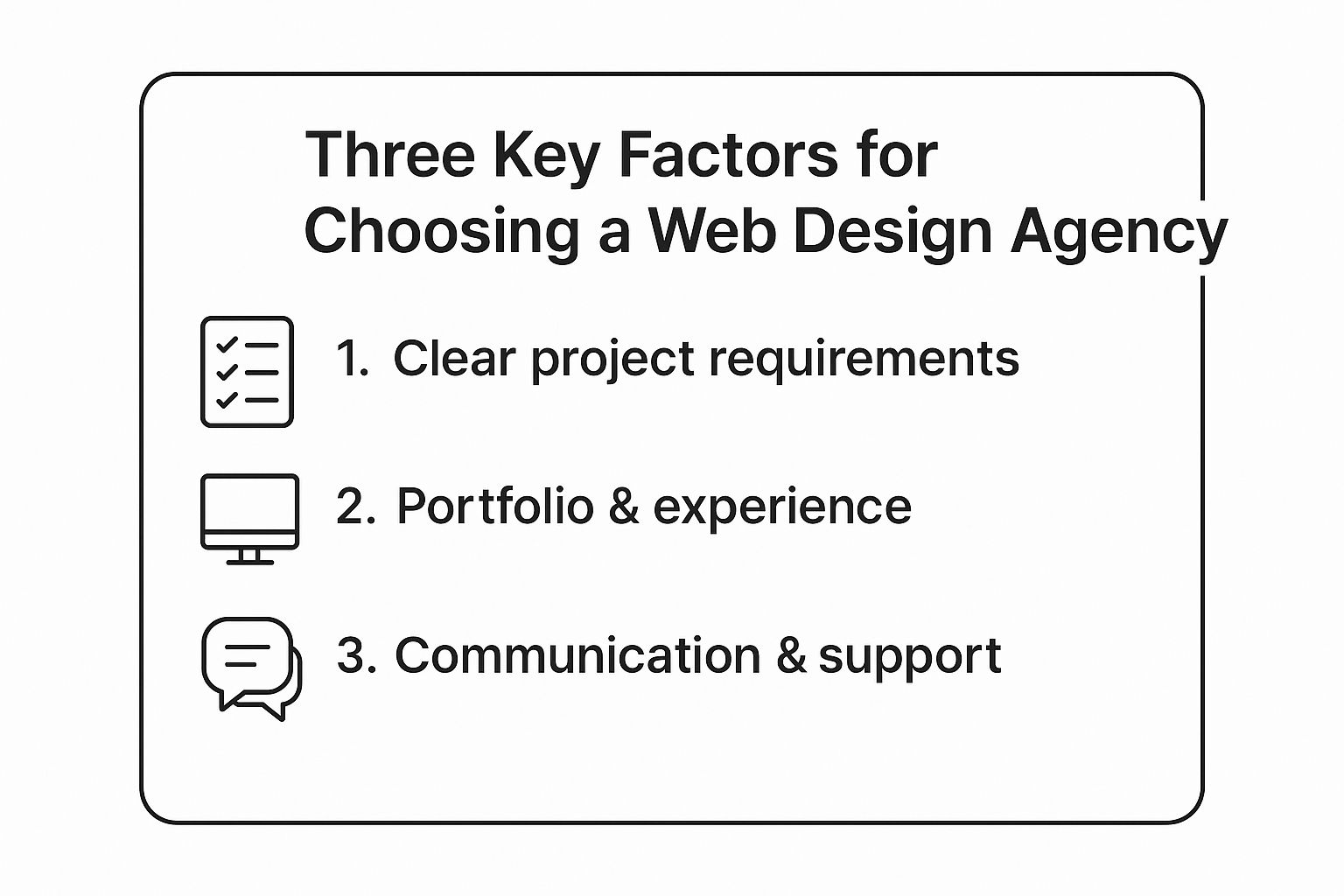
As the image shows, a truly successful project is a perfect balance of your own well-defined needs, the agency's track record, and a strong, open relationship built on good communication.
Defining Your Project Goals and Budget
Before you even think about searching for web design agencies in West Lothian, you need to know exactly where you're headed. Kicking off the process without clear goals is like asking a builder to construct a house without blueprints – you'll end up with a mess that doesn’t come close to what you actually needed.
First things first, you have to get crystal clear on what this new website is supposed to do for your business.
Is the main goal to pull in local leads from places like Livingston and Bathgate? Maybe you want to start selling products directly to customers across Scotland and beyond? Or perhaps it's simply about building some serious brand credibility with a professional online presence that makes you look the part. Nailing these aims down is the single most important first step.
How to Pinpoint Your Website Must-Haves
Once you’ve figured out the big-picture goals, it's time to break them down into specific features. Thinking about what your website absolutely must do to be considered a success will make it so much easier to explain what you need to any potential agency.
- List Your Core Functionalities: Do you need an e-commerce shop with secure payment processing? A slick portfolio to show off your work? What about an integrated booking system for appointments? Get specific.
- Identify Your Target Audience: Are you trying to connect with young families in Broxburn or established businesses over in Edinburgh? Knowing who you're talking to will shape everything from the design and tone of voice to the features you'll need.
- Consider Future Growth: Where do you see your business in two or three years? A great website should be able to grow with you, so it's smart to plan for features you might need down the line.
A well-defined project scope is the foundation of a successful website. It prevents "scope creep," where new features get tacked on mid-project, blowing your budget and timeline out of the water.
Setting a Realistic Budget
Talking about money can feel a bit awkward, but it's crucial to have a realistic budget in mind from the start. A website isn't just a cost; it's a serious investment in the future of your business. The price can vary wildly, from a simple brochure site to a complex, custom-built platform.
Having a price range in mind, rather than a single fixed number, gives you more wiggle room when you start talking to agencies. For businesses just starting out, it's also really important to understand what's included in any quote. Many agencies offer packages that clearly lay out what you get for your money.
For instance, looking at a starter web design package can give you a solid baseline for what essential features cost. This helps you compare proposals on an apples-to-apples basis and ensures you're putting enough resources towards your main goals without splashing out on bells and whistles you don't need yet.
Evaluating Portfolios Beyond the Surface
An agency's portfolio is their CV. It's the first thing you'll look at, but a quick scroll through pretty pictures isn’t enough. You have to look past the surface-level aesthetics and dig into the strategy behind the pixels.
A great website is a problem-solving machine. It’s built to guide users, generate leads, or drive sales. As you browse an agency’s past work, ask yourself: can I see a clear business objective being met here? This is central to figuring out how to choose a web design agency that delivers real value, not just a pretty design.
Looking for Strategic Depth
The best portfolios don't just show you what an agency built; they tell you why they built it that way. Look for case studies or project descriptions that explain the client's initial challenges and exactly how the new website solved them. That’s the difference between a simple gallery and a track record of real business impact.
In today's market, this strategic approach is non-negotiable. According to IbisWorld, the UK web design sector hit a revenue of £621.3 million in 2023. A strong online presence is vital to stand out.
A portfolio that only shows polished final designs without explaining the strategy or results is like a movie trailer with all the best action shots but no plot. It looks exciting, but you have no idea if it actually tells a good story.
How to Evaluate a Portfolio Effectively
As you review a portfolio, put your critical hat on. Your goal is to find a partner whose work shows a deep understanding of user experience and business needs, especially within the Scottish market.
- Is there variety in their work? Be wary if an agency's projects all look suspiciously similar. It could be a red flag that they’re just tweaking pre-made templates instead of creating custom solutions that fit each client's unique brand and goals.
- Does the design serve a purpose? Look at the layout. Does it naturally guide your eye to a call-to-action? Is the navigation intuitive? A good design makes it effortless for a visitor to do what the business wants them to do.
- Is there evidence of local expertise? For a business based in West Lothian, an agency with experience in the Scottish market is a huge advantage. Their portfolio should reflect an understanding of local audiences and the regional business landscape.
Asking The Right Questions In Your First Meeting

So, you've shortlisted a few web design agencies and the first meeting is in the diary. This is your moment to look past the slick portfolio. You’ve done your homework and you know what you need your website to do. Now it’s time to find out if they’re the right partner to make it happen.
Walking in with a solid list of questions is what separates a vague chat from a truly productive meeting. It's about more than just the price tag; it’s about getting a feel for their process, how they communicate, and the way they handle the inevitable bumps in the road. How an agency fields these questions will tell you everything you need to know about their experience and whether they're the right fit for your West Lothian business.
How to Uncover Their Design and Development Process
A structured, predictable process is the hallmark of an agency that knows what it's doing. You need to understand exactly how they plan to turn your vision into a live, functioning website. If their answers are woolly, that’s a big red flag. Don't be shy about asking for the specifics.
- Can you walk me through your typical project timeline, from our first meeting to the website launch? This gives you a clear picture of their project management and tells you what they'll need from you at each step.
- Who will be my main point of contact, and how often can I expect updates? Nothing sinks a project faster than poor communication. Knowing who you’ll be talking to and the rhythm of their updates prevents a lot of headaches down the line.
- How do you approach mobile-first design and ensure the site performs well on all devices? With over 55% of all website traffic now coming from mobile phones, this isn't just a nice-to-have, it's essential.
- What is your process for handling project scope changes or unexpected feature requests? Let's be realistic, projects evolve. Their answer here reveals how flexible they are and how they manage changes to the budget and schedule.
An agency that can't clearly explain its process is likely to be disorganised. Look for a team that has a structured approach but is flexible enough to adapt to your specific needs.
Diving into Technical Expertise and Post-Launch Support
Getting the website built is just one part of the journey. You need confidence that the agency has the technical chops to build a site that’s secure, fast, and visible to search engines. Just as crucial is knowing what happens after you hit the 'launch' button.
- How do you incorporate SEO best practices into the design and build process from the beginning? SEO isn’t an afterthought you can just tack on at the end. It has to be baked in from day one.
- What content management system (CMS) do you recommend, and why is it the right choice for our goals? Listen carefully to their reasoning. Are they recommending the best tool for your specific needs, or just the one they know best?
- What kind of post-launch support, training, and maintenance do you offer? A website needs looking after. Find out what their support packages look like and how they help clients keep their site in top shape after the project is officially 'done'.
Getting solid answers to these questions will give you the confidence to make the right choice. If you’re ready to have this conversation, you can schedule a free consultation to talk through your project.
How to Read a Proposal and Spot Red Flags

After all the initial chats and meetings, the proposals finally start hitting your inbox. This is where things get serious. A proposal is so much more than just a price tag; it's the blueprint for your project and a real glimpse into how an agency works.
A great proposal should feel like the agency was actually listening. It won't be a generic template but a direct response to your conversations, clearly mapping out how they plan to hit your business goals. It should leave you feeling confident and clear, not scratching your head.
Deconstructing a Strong Proposal
A solid proposal doesn't just list what they'll do; it explains how. It breaks the project down into manageable, understandable stages, so you know exactly what your investment gets you. Every single point should tie back to what your West Lothian business needs to succeed online.
- A Detailed Scope of Work: This is the nitty-gritty. Vague promises like "a user-friendly design" just don't cut it. You need specifics, like "a five-page website including Home, About, Services, Blog, and Contact pages," or "full e-commerce functionality with Stripe payment integration." No ambiguity.
- Clear Deliverables and Milestones: Look for a timeline. It should outline key stages like design mock-ups, the development phase, content integration, testing, and the final launch. This shows they have a proper process and helps you see where you'll need to provide feedback to keep things moving.
- A Transparent Cost Breakdown: The numbers need to be crystal clear. An itemised breakdown of costs is non-negotiable if you want to avoid surprise bills down the line. It should separate the fees for design, development, the content management system, and any ongoing costs like maintenance or support.
A great proposal is an agency's promise. If it’s detailed, clear, and tailored to your needs, it’s a strong indicator they will approach the project itself with the same level of care and professionalism.
Common Red Flags You Cannot Ignore
Just as a good proposal builds confidence, a bad one should set alarm bells ringing. Spotting these warning signs early can save you a world of pain, not to mention time and money. Be wary of any agency that seems to be hiding the details or rushing you.
- Unusually Low Prices: If a quote seems too good to be true, it almost certainly is. A rock-bottom price often signals that they're using cheap templates, outsourcing to inexperienced developers, or are planning to sting you with hidden costs later on.
- Vague or Generic Language: Does the proposal feel like a copy-and-paste job? Is it full of jargon with no real explanation? If it could have been sent to any business without changing a word, that’s a huge red flag. It shows they haven't invested time in understanding your project.
- High-Pressure Sales Tactics: Be very cautious if you feel like you're being rushed. Any agency pushing you to sign immediately with a "limited-time offer" is best avoided. A genuine partner will give you the time and space you need to make a decision you're comfortable with.
FAQs on Choosing a Web Design Agency
Choosing a partner for your website is a big decision. Here are answers to some of the most common questions we hear from businesses in West Lothian and beyond.
What is the difference between a web designer and a web developer?
This is a key distinction. Think of it like building a house:
- A web designer is the architect. They focus on the look, feel, and user experience (UX) – the layout, colours, and how a visitor interacts with the site.
- A web developer is the builder. They use code to construct a functional website based on the designer's blueprint, handling all the technical behind-the-scenes work.
Most good agencies have both skill sets, ensuring a seamless process from concept to a live, working site.
Should I hire a local or remote agency?
This comes down to your preference. A local West Lothian agency offers face-to-face meetings and a deep understanding of the regional market. A remote agency provides a wider talent pool and can sometimes be more competitive on price. For businesses focused on a local audience, a partner who understands the area often has an edge.
How much should a professionally designed website cost?
Website costs vary hugely. A simple brochure site will be a fraction of a complex e-commerce platform. A professional agency will not give you a fixed price until they fully understand your goals. Be wary of quotes that seem too good to be true, as they often signal the use of generic templates or cut corners on essentials like mobile optimisation. A good proposal will always break down every cost, so you know exactly where your investment is going.
Choosing the right web design partner is one of the most important decisions you'll make for your business online. At Laraworks Commerce Ltd, we specialise in creating websites for businesses in West Lothian that don’t just look good—they perform. If you're ready for a website that delivers real results, let's have a chat.